All legislative bills introduced in the Legislature are entitled to a public hearing. After a legislative bill is introduced, it is assigned to a committee. A committee is a small group of senators that focuses on a specific topic, like Health and Human Services or Education. There are 14 standing committees within the Nebraska Legislature.
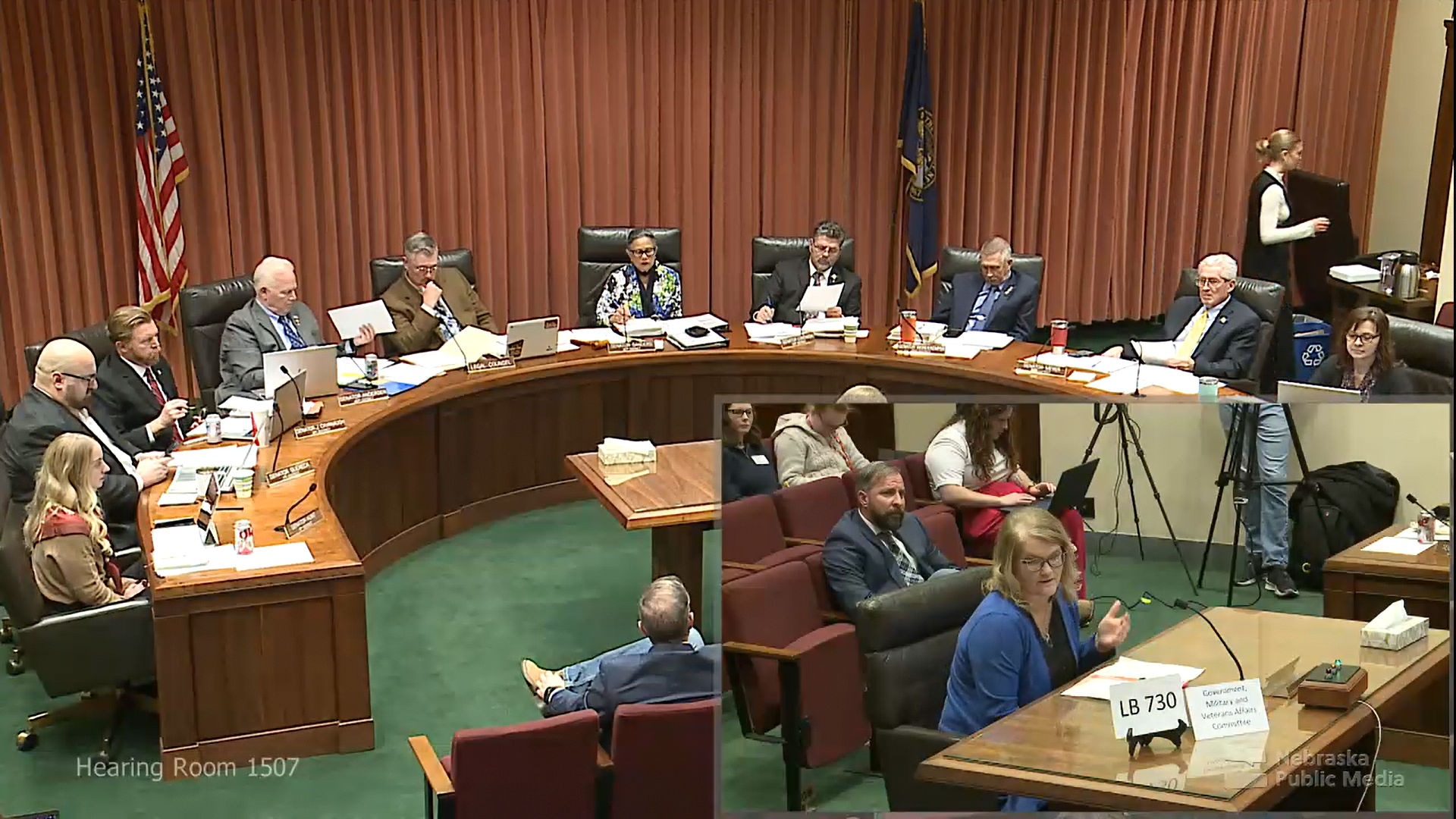
Public hearings take place in front of the committee to which the legislative bill is assigned. Any member of the public can attend a committee hearing and provide a verbal statement supporting, opposing, or neutral to the legislative bill being heard. That verbal statement is referred to as testimony.
Anyone wanting to provide testimony during a hearing must be present at the Capitol in Lincoln for the hearing. Members of the public are typically given seven days’ notice of when a legislative bill is scheduled to be heard. Hearings typically begin at 1:30 p.m. and may go as late as possible to allow each legislative bill and each testifier a chance to be heard.
Testimony becomes part of the Legislative Record, meaning anyone can review what was said through transcripts or video footage. Members of the media may be present at hearings and may quote you in a news story. They may ask to interview you before or after you testify, which you can decline. However, members of the media do not have to ask for permission to quote you in a news story based on what you said during the hearing.
Tips For Testifying In Person
Preparing to testify can feel overwhelming. In addition to understanding the legislative bill, you may also be navigating emotional responses connected to your experiences or the impact of the legislative bill. Check in with yourself throughout the process. You can change your mind at any point about how you participate.
Preparing
- It can be helpful to write out your testimony in advance, even if you don’t plan to read it.
- Focus on the main points you want decision-makers to remember.
- Keep the language clear and easy to read.
- Avoid criticizing any particular senator or bringing up other bills. Focus only on the proposed legislative bill and its potential impact.
- You do not have to share your full story for your testimony to be meaningful. Share what feels most relevant to the legislative bill and your perspective. Personal experience is one option, but not the only way to communicate your position.
- Writing and sharing testimony can bring up strong emotions. Pay attention to how you are feeling as you are writing. You can take breaks or step away at any time. If something feels too difficult to share, you can choose not to include it. You can come back to parts of your story at another time.
- Testimony is typically limited to 3-5 minutes. Prepare for 3 minutes. A one page document is usually enough.
- If you plan to read you rtestimony aloud, use a readable font size with space between lines for your own copy. For the other copies, format your testimony like a formal letter.
- Read your testimony out loud, and practice in front of a mirror. Use a 3-minute timer. Notice how it sounds and how it feels. Adjust as needed, so your message is clear and fits within the time limit. Remember that what you say does not have to match exactly what you wrote. Summarizing is okay.
- Bring 15 copies of your written testimony for the hearing. One copy for you, one copy for each committee member, one copy for the committee clerk, and one copy for the legal clerk.
While You Wait
- There may be a long wait before your legislative bill is called. You can stay in the room to observe or step out if needed.
- Hearing others testify may bring up emotions. Take breaks as needed.
- You may not be seated where you feel most comfortable. This is normal, and you may be able to find another seat in between legislative bills.
- If someone testifying before you brings up information that you want to reiterate or refute, you can speak to this even if it’s not included in your written testimony.
When It’s Your Turn
- Move closer to the front of the room as your legislative bill approaches.
- After the senator who introduced the legislative bill speaks, proponents (in support) usually testify first, followed by opponents (in opposition) and neutral testimony
- There is no set order for who testifies.
- It is up to you to make your way to the chair.
Starting Your Testimony
- Give your testifier sheet and copies of your testimony to the clerk.
- A green light indicates your time has started.
- Start by stating and spelling your name.
Ending Your Testimony
- A yellow light signals one minute remaining. Red means time is up.
- Thank the committee when you are finished.
- You can let the committee know if you are open to answering questions.
- Wait to be dismissed before leaving the table.
Questions from Senators
- Senators may ask questions related to your testimony.
- You can say you don’t know or that you are not comfortable answering.
- You can offer to follow up later if you choose.
After Your Testimony
- You can leave, stay, or take a break—whatever feels best for you.
- You are not required to speak with media or others after testifying.
- It’s normal to have emotional responses after sharing. Give yourself time and space and/or connect with loved ones or professionals.
- You can follow the legislative bill’s progress using a legislative bill tracker if you choose.
Support: If you would like support preparing for testimony or processing afterward, you can contact the Nebraska Coalition. The Nebraska Coalition offers one-on-one resources, guidance, and emotional support to help you navigate the legislative process.
For more information that might be helpful in testifying, see Take Care of Yourself section.
Taking Care of Yourself
If you decide to engage in public policy, it’s also important to consider how to take care of yourself before, during, and after. Thinking ahead about what support you may want can help you care for yourself throughout the process.

 Donate Today