There are many ways to engage in public policy in Nebraska. Providing written comments online is an easy way to make your voice heard during the legislative process.

Online comments are a way to have your position on a legislative bill be part of the record without having to attend a public hearing. This may be a good option if you:
Online comments must be submitted through the Legislature’s website. Comments can be up to 500 words in length and are due by 8:00 a.m. the morning of the bill’s scheduled hearing.
When leaving an online comment, you will be asked to provide basic personal information, such as your first and last name, address, legislative district, and email address. After submitting your comment, an email verification will be sent to the email address you provided. You must verify your email address by 8:00 a.m. the day of the legislative bill hearing for your comment to become part of the Legislative Record.
After a bill hearing is completed, the committee chair will announce how many online comments were submitted as proponents (in support), opponents, and neutrals.
Please note that comments are public record, with no expectation of privacy. Your first and last name, as well as the position you took, will be made public through the Legislature’s website once the legislative bill has advanced out of committee. Senators and their staff will be able to read your comment and may quote it when debating that legislative bill on the floor of the legislature.
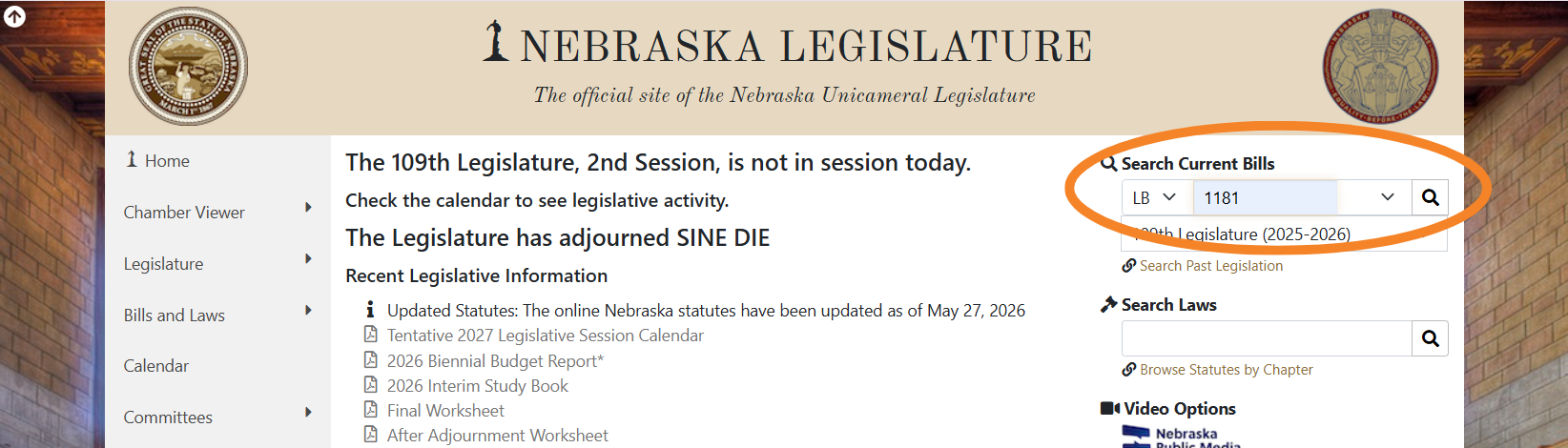
Visit the Nebraska Legislature’s website and locate the bill you care about using the search bills feature.
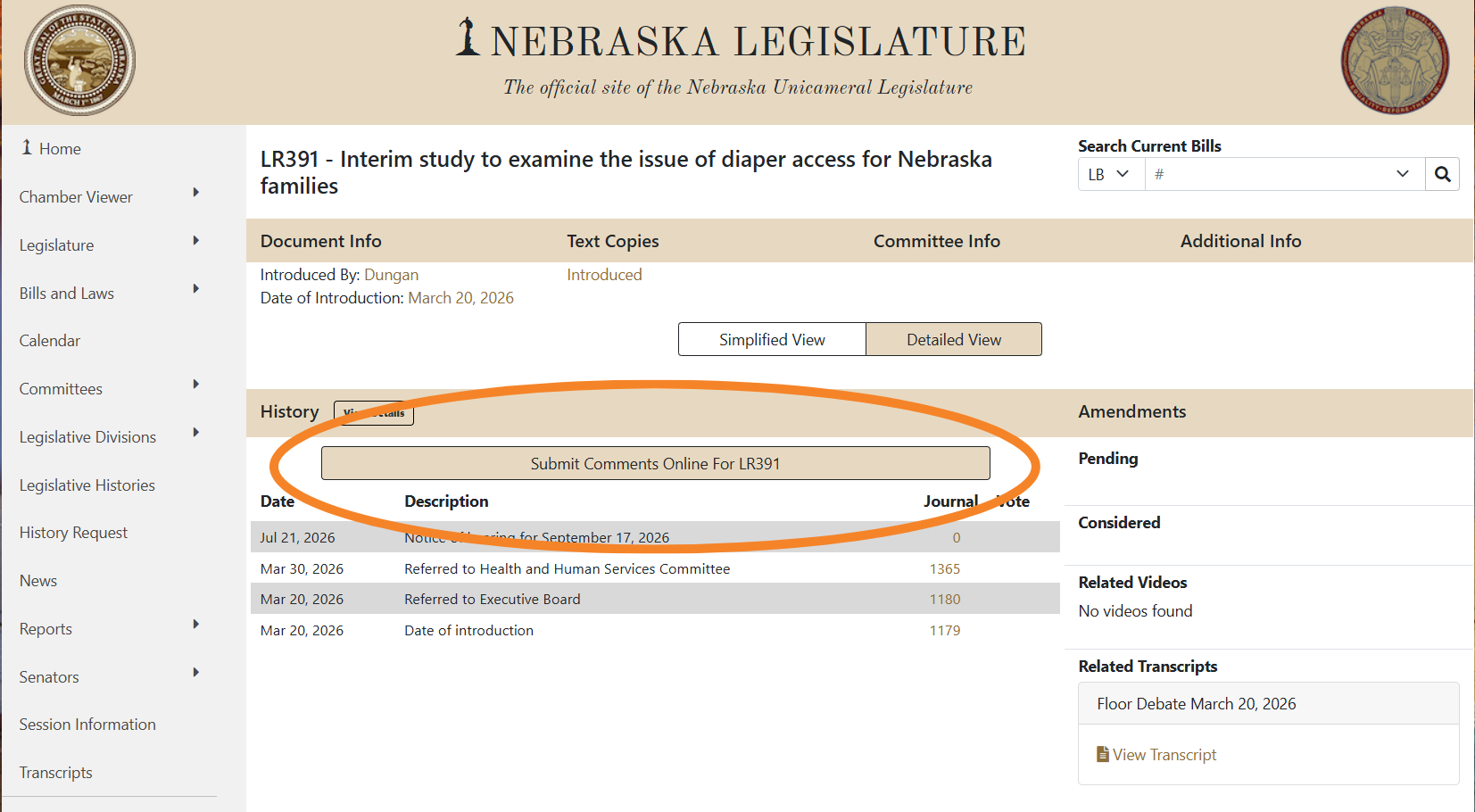
Once on the bill’s landing page, click “Submit Comments Online.”
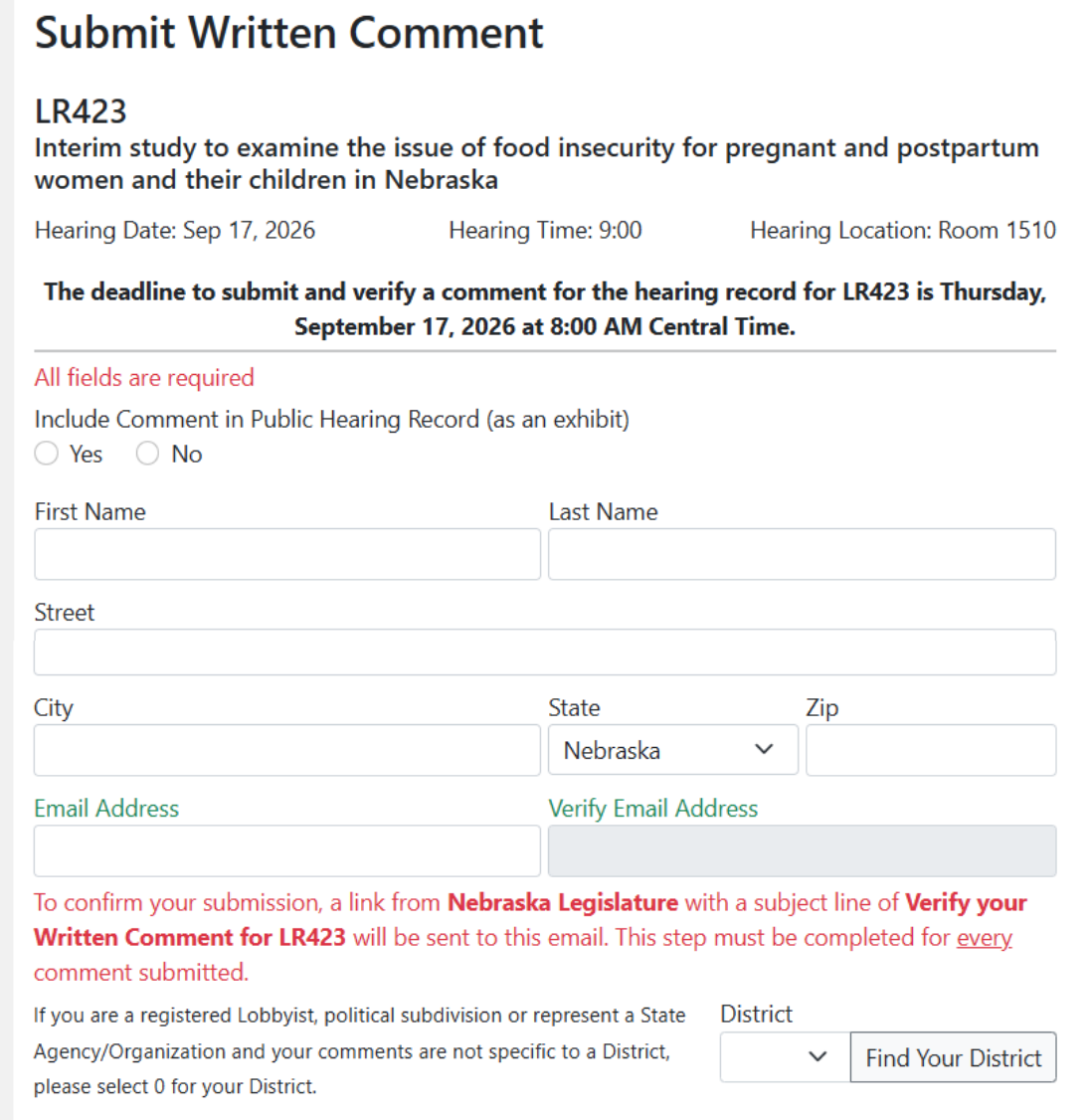
Check “Yes” to indicate you want your comment included in the hearing record.
Fill out your personal information, including name, address, email, and the legislative district you live in.
Indicate your position: proponent (in support), opponent, or neutral.
Write your comment using as many of the 500 words as you want. You can simply state that you are in support/opposition to a legislative bill, or provide a detailed justification of your position.
Submit the form.
Verify your comment via email. This must be done before 8:00 a.m. on the day of the legislative bill’s hearing. You should receive a verification email right after submitting the online form. If you can’t find your verification email, check your spam/junk folder. If you still cannot find the verification email, contact the Clerk’s office.

If you decide to engage in public policy, it’s also important to consider how to take care of yourself before, during, and after. Thinking ahead about what support you may want can help you care for yourself throughout the process.
 Donate Today