Imagine a young adult sharing her experience of living with an extremely controlling partner: She must have purchases approved by her partner before buying items (including groceries). She’s not allowed to work outside the home, leaving her heavily dependent on her partner’s income for everything. She also has limited contact with friends—even friends she has known for many years. Her partner is also extremely jealous and often accused her of cheating without cause.
Whether you work in the anti-violence field or not, you can probably see numerous red flags in this scenario. You may have had a gut response: Something isn’t right here.
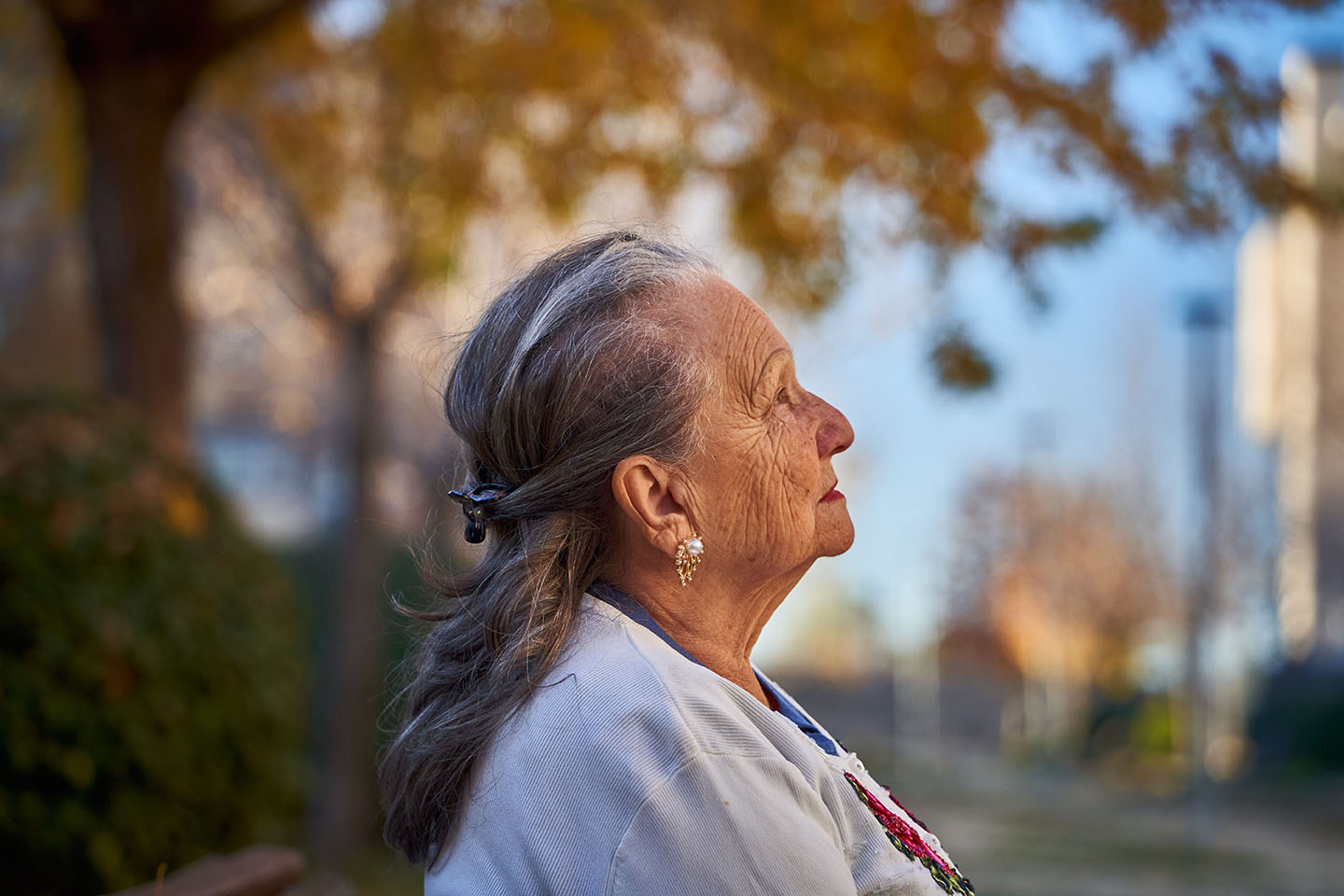
Now, imagine an older adult around 65 years old sharing the same scenario. Do the red flags become less visible? Do we soften our assessment? Do thoughts creep in such as, “That behavior was normal for their time,” or “That’s just part of their generation”?
When Age Changes Our Perception
- Have you ever found yourself cringing while listening to your grandparents interact because something about the relationship seemed to involve power and control or emotional abuse?
- Have you ever tried to find domestic violence services for someone over 60 and been referred to Adult Protective Services instead?
- Have you ever tried to find a domestic violence shelter for an older adult who may also have dementia, mobility challenges, or other health-related needs?
If you answered “yes” to any of these questions, you are likely familiar with the gaps in services and responses for older adults experiencing intimate partner violence, sexual violence, or trafficking.
Domestic violence does not stop when someone reaches a certain age. Yet older survivors can be overlooked in our systems, our data, our services, and even our understanding of what domestic violence looks like.
Domestic Violence Across the Lifespan
Older adults may experience many of the same forms of power and control as younger survivors, including financial abuse, isolation, intimidation, emotional abuse, physical violence, sexual violence, and coercive control.
However, the circumstances surrounding abuse may look different later in life.
An older survivor may have been with their partner for decades. They may share a home, retirement income, bank accounts, or caregiving responsibilities. They may have health conditions or disabilities that make leaving more difficult. Their social circle may have become smaller over time, leaving them with fewer sources of support.
And sometimes, the person experiencing abuse may not identify what is happening as domestic violence. Generational attitudes and expectations about marriage and relationships can influence how someone understands their experience. An older survivor may have grown up at a time when domestic violence was rarely discussed, and leaving an abusive relationship may not have been viewed as an option.
These realities should not make the red flags less visible. They should make us look more closely.
The question should remain the same: Does this person have the freedom to make choices about their own life, relationships, finances, health, and safety?
How Abuse Affects Older Adults’ Health
The consequences of intimate partner violence and elder abuse can extend far beyond immediate physical injuries.
According to Futures Without Violence’s Intimate Partner Violence and Elder Abuse in Later Life: Educational Brief, the health consequences associated with intimate partner violence and elder abuse can include:
- Depression and anxiety
- Social isolation
- Cognitive decline
- Urinary tract infections and sexually transmitted infections
- Frequent falls
- Cardiovascular disease
- Loss of independence, including nursing home placement
- Premature mortality
What Makes It Harder for Older Survivors To Leave
Older survivors may also face significant housing challenges when they attempt to leave an abusive relationship.
Data from the 2023-2024 National Intimate Partner and Sexual Violence Survey indicate that millions of people experience intimate partner violence, and a portion identify housing services as a need. For older survivors, the risk of housing instability can be compounded by fixed incomes, limited employment opportunities, health concerns, accessibility needs, and dependence on an abusive partner for housing or financial support. The National Alliance to End Homelessness’s post on Supporting Older Adults of Domestic Violence identifies several challenges that can make leaving domestic violence particularly difficult for older adults.
- Fear, chronic health conditions, limited social support, and financial dependence can all create barriers to leaving and seeking help.
- Some older adults may not recognize their experiences as domestic violence, particularly if they grew up at a time when conversations about domestic violence were less common. Others may have spent decades building a life with their partner and may not have considered leaving an option.
- Economic dependence can also be a significant barrier. If an older survivor relies on their partner for housing, income, transportation, health insurance, or other basic needs, leaving can feel like an impossible choice.
- Health and mobility challenges can create additional obstacles. A survivor may struggle to physically navigate a move, access transportation, find accessible housing, or meet daily needs without their partner.
- And while an older adult may have spent decades building relationships and community connections, their informal support network may have diminished over time through retirement, relocation, disability, or the death of friends and family.
For these survivors, leaving is not simply about walking out the door.
5 Ways to Support Older Adults
If we want to prevent and respond to domestic violence across the lifespan, we must make sure older survivors are part of the conversation.
- Center older survivors.
Include older adults in domestic violence awareness, prevention, intervention, and public education efforts. Representation matters—not only in our outreach, but in how we design services. For resources, check out The National Clearinghouse on Abuse in Later Life (NCALL).
- Bridge the gap.
Strengthen partnerships between survivor advocacy organizations, Adult Protective Services, aging services, healthcare providers, housing providers, and other systems that support older adults. No single system can address all of the needs an older survivor may face. For resources, visit Administration for Community Living.
- Use inclusive language.
Talk about domestic violence across the lifespan rather than framing domestic violence as something that primarily affects younger people. The National Clearinghouse on Abuse in Later Life (NCALL) has helpful resources.
- Train professionals.
Healthcare providers, law enforcement, attorneys, advocates, housing providers, and other professionals need the tools to recognize domestic violence in older adults—including coercive control, financial abuse and exploitation, isolation, and interference with healthcare. Get started by Getting the Facts on Elder Abuse.
- Ask different questions.
When working with an older adult, don’t assume that a long-term relationship is a safe relationship. Ask about choice, autonomy, access to money and resources, relationships with family and friends, healthcare decisions, and whether the person feels safe at home. For help getting started, check Working with Older Survivors of Abuse: A Framework for Survivors.
The Red Flags Are Still There
Sometimes, our assumptions make red flags harder to see, but the reality is that red flags don’t disappear with age. A partner who dictates what someone can purchase, prevents them from working, controls their finances, isolates them from friends, or humiliates or emotionally abuses them is engaging in concerning behavior, whether the survivor is 25 or 65.


 Donate Today