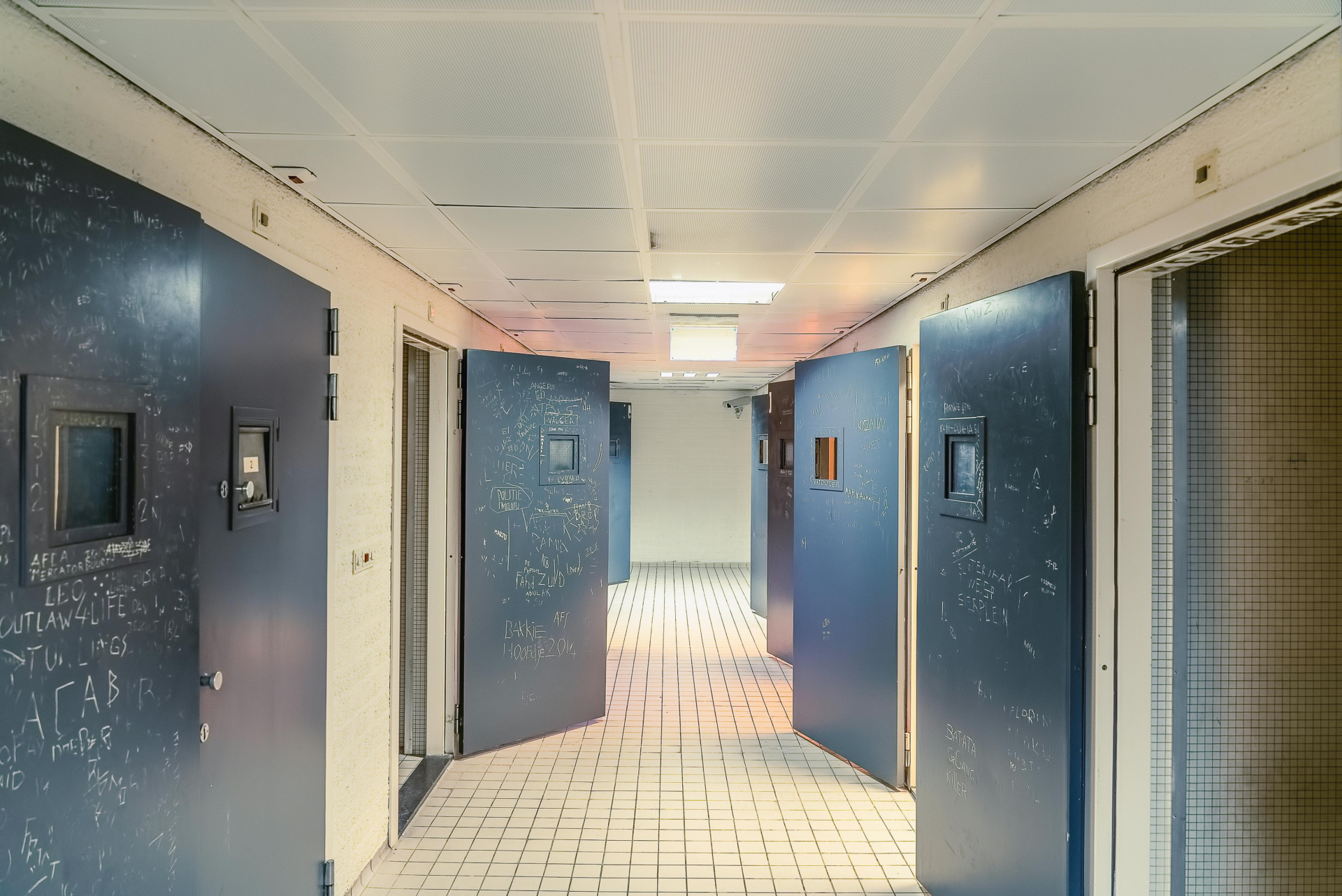
Sexual Assault Awareness Month is a time to commemorate the progress of the anti-violence movement and recommit ourselves to ending all forms of sexual violence. Sexual assault in U.S. jails, prisons, and detention centers remains widespread, yet largely overlooked. In popular culture, we often see prison rape joked about or framed as deserved punishment for people who have caused harm. These narratives minimize the issue and reinforce the idea that some people do not deserve safety. If we are committed to creating a future where everyone is safe from sexual violence, we must challenge these narratives and demand change within detention facilities and correctional systems.
How Common is Sexual Violence in U.S. Prisons and Jails?
According to the Department of Justice:
- 49,300 people housed in U.S. jails and prisons experienced sexual violence between 2023 and 2024.
- Roughly half of these assaults were committed by fellow inmates
- About half were committed by staff.
And according to the Nebraska Department of Corrections:
- 95 complaints of sexual assault in facilities were filed in 2024.
- 10 of which were substantiated and
- 19 of which were still under investigation.
- 6 of the substantiated/active cases named staff as perpetrators.
- 23 of these cases name inmates as perpetrators.
Why Detention Environments Increase the Risk of Sexual Violence
Sexual violence is rooted in power and control, and by design, detention environments are built around power and control. Incarcerated people are extremely isolated and lack autonomy. Staff have the power to restrict their freedom by taking away time outdoors, limiting visitors, or placing them in solitary confinement. Detention facilities control basic needs, including safety. People living in a high-control environment, such as a detention center, also tend to create a social system in which only a few people hold most of the power and influence. These power imbalances increase the risk of sexual violence victimization and severely limit the opportunity to hold perpetrators accountable.
Who Faces the Highest Risk of Sexual Violence in Detention?
Populations that experience a disproportionately high risk of sexual violence, such as marginalized communities and people with behavioral health and trauma histories, are overrepresented in the carceral system.
- Black Americans make up 13% of the overall population, but 37% of the incarcerated population.
- Native and indigenous people also face disproportionately high rates of incarceration.
- Among the population of people incarcerated in state prisons, 43% have a mental health diagnosis.
- A 2016 Vera Institute study of women in jails found that 86% had experienced sexual violence and 77% had experienced intimate partner violence throughout their lifetime.
Why Incarcerated Survivors Are Not Believed
Incarcerated survivors face significant barriers to being believed because they don’t fit the mold of the “perfect victim”. The public assumption is that only “bad” people break the law, and therefore, everyone convicted of a crime is a “bad” person. Whether it is out of a need to feel safe in an uncertain world or due to the lingering misogyny in our culture, many of us hear a survivor’s story and reflexively search for what the survivor did that made them “deserve” to be harmed. But when we accept that some people deserve to be sexually assaulted, we fail to hold perpetrators responsible and miss opportunities to confront injustices that perpetuate sexual violence.
What is the Prison Rape Elimination Act (PREA)?
In 2003, Congress passed the Prison Rape Elimination Act (PREA), aimed at preventing and responding to sexual assault in detention. PREA is a good start to addressing sexual violence in detention, but it does little to meaningfully address risk factors.
Gaps in Implementation and Accountability
States have been slow to implement the legislation. As of August 2024, only 25 states and the District of Columbia comply with PREA. One study shows that in detention centers across the country, PREA requirements are implemented inconsistently, materials explaining PREA rights are often difficult to understand, and procedures for reporting and investigation lack transparency.
Reduced Support and Oversight
Funding cuts put what little progress has been made in jeopardy. Reporting indicates that the federal government ceased funding the National PREA Resource Center in early 2025, which supports correctional facilities in implementing PREA. While funding has been partially restored, the center’s capacity is severely limited. Funding cuts have also weakened the federal government’s ability to audit correctional facilities for compliance with PREA and partner with victim service organizations.
What Additional Challenges Exist in Nebraska’s Correctional System?
Overcrowding and Staffing Shortages
Nebraska is one of the 25 states that comply with PREA. But Nebraska jails and prisons are plagued by serious issues. Recent reporting indicates that Nebraska’s prison system is among the most overcrowded in the U.S., and many facilities are experiencing a staffing emergency. These conditions make it difficult to address the safety and welfare of people incarcerated in Nebraska.
Lack of Confidential Support Services
Another area of concern is the absence of a formal partnership between the Nebraska Department of Correctional Services (NDCS) and an external partner who can provide confidential, supportive services to incarcerated survivors. Outside supportive services give survivors access to trained advocates who can help them heal from trauma, navigate the reporting process, and decide if and how to report abuse without being required to relay information to the facility. According to the NDCS’s 2024 Annual PREA Report, NDCS has attempted to partner with several external service providers, though its last formal partnership was in 2022. Although PREA only requires the agency to attempt to enter into such a partnership, providing incarcerated survivors with an external, confidential source of support is widely considered to be best practice.
Concerns About Investigation Outcomes
The majority of investigations into sexual violence within Nebraska’s prisons and jails end in a finding of “unsubstantiated” or “unfounded”. In 2024, the NDCS’s Annual PREA Report classified 51% of investigations as “unsubstantiated” and nearly 18% as “unfounded”. This is well above the estimated average percentage of false reports of sexual violence, which falls between 2% and 10%, according to a 10-year analysis. Although it is difficult to determine how these findings were made, they do raise questions.
If we are truly committed to ending sexual violence, we cannot ignore what is happening within detention facilities. We must support policies that strengthen oversight, prevention, and accountability, as well as ensure that incarcerated survivors have access to supportive services.
This might seem like an overwhelming issue to address, but small actions can make a difference. You can start by learning how this issue affects your own community. Share what you learn with your friends, family, and colleagues, and contact your elected representatives to express your concerns.


 Donate Today