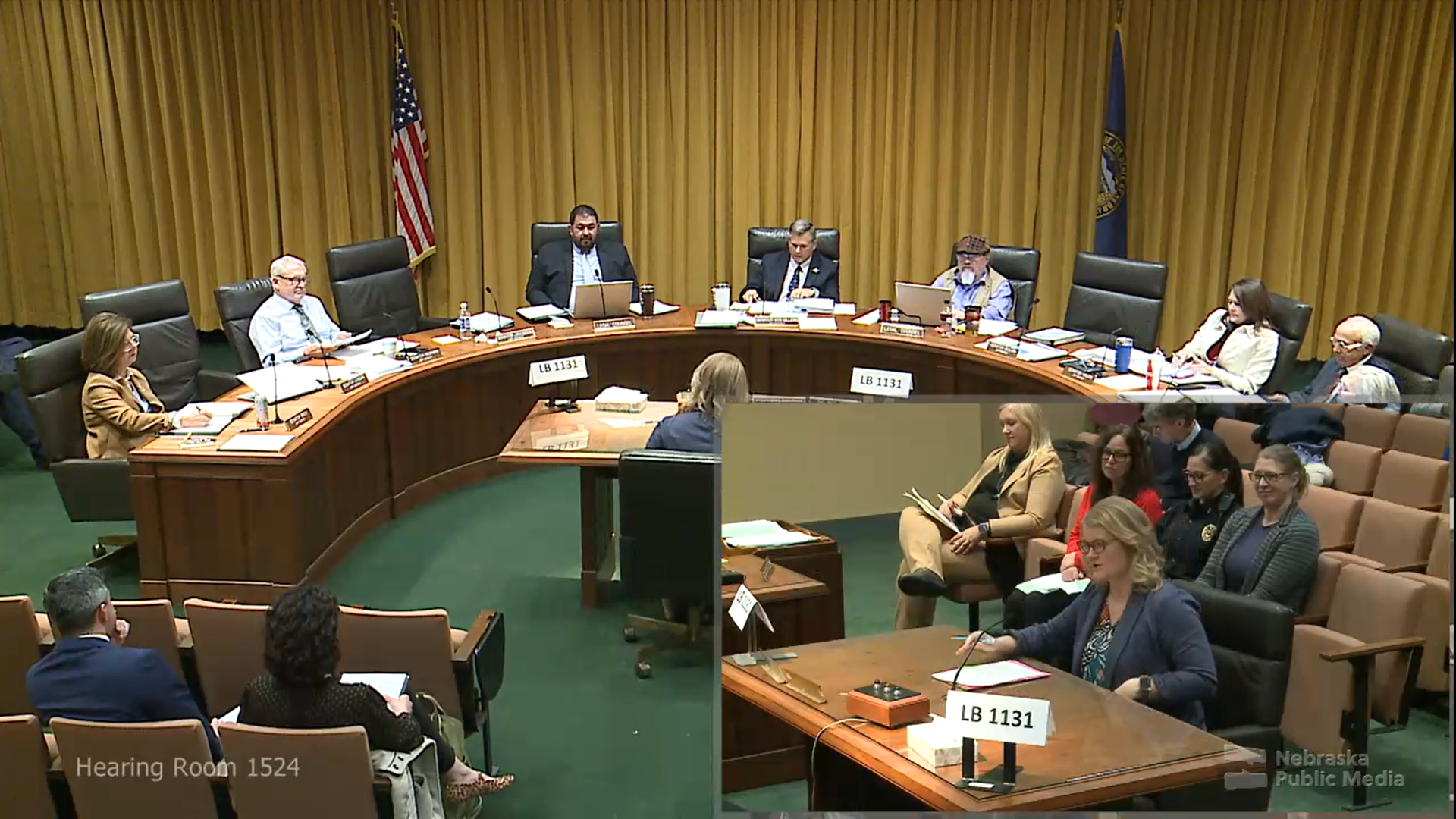
The 2026 Legislative session brought meaningful progress for survivors and important steps toward preventing violence across Nebraska. New laws will strengthen protections in the courtroom, improve responses to missing persons, expand access to care, and increase funding for services that survivors rely on every day.
Throughout the session, the Nebraska Coalition to End Sexual and Domestic Violence played an active role in shaping policy. Our policy team monitored legislation, analyzed impact, engaged directly with lawmakers, and coordinated testimony that brought experiences into the legislative process. Together with supporters and partners across the state, this work is helping shape a safer, more responsive system for individuals and families across our state.
2026 Session at a Glance
- More than 60 bills monitored
- 20 bills actively supported
- 7 bills opposed
Key Bills Passed
This year, several bills were signed into law or successfully amended into other legislation. These changes reflect progress across the legal system, community safety, and access to care.
Strengthening Protections in the Legal System
LB 103 – Admissibility of Evidence in Sexual Assault Cases.
Introduced by Sen. DeBoer.
This bill helps protect survivors in court by limiting the use of past sexual history or prior assaults, information that is often used to discredit or retraumatize survivors. By strengthening evidentiary standards, it supports a more respectful and equitable legal process.
LB 1181 – Rights of Victims of Certain Crimes
Introduced by Sen. Bosn. Prioritized by Speaker Arch.
This bill expands who is recognized as a victim to include broader family members and others impacted by homicide. It also strengthens victims’ rights by requiring consultation before plea agreements and allowing written impact statements to be considered. These changes help ensure that those affected by violence are meaningfully included in the justice process.
Improve Safety and Prevention Efforts
LB 751 – Study on Missing Black Women and Children
Introduced by Sen. Spivey.
This bill directs the Nebraska State Patrol to conduct a comprehensive study on missing Black women and children in Nebraska. By strengthening how the state tracks and responds to missing person cases, many of which are connected to domestic violence, sexual violence, and trafficking, it supports more effective prevention and response efforts.
LB 753 – Recognition of Military Protective Orders
Introduced by Sen. Rountree.
This bill ensures that military protective orders are recognized and enforceable in Nebraska. It helps close gaps in protection for survivors connected to military systems, increasing consistency and safety across jurisdictions.
Expanding Access to Care and Support
(LB 773) AM 2977 to LB 958 – Nebraska Prenatal Plus Program
LB 958 introduced by Sen. M. Cavanaugh. AM 2977 and LB 773 introduced by Sen. Dungan.
This update strengthens and expands prenatal and postpartum support for at-risk Medicaid-eligible individuals, including many survivors who face increased health and safety risks during pregnancy and after childbirth. Expanded access to care can play an important role in long-term stability and well-being.
(LB 825) AM 2923 to LB 912 – Domestic Abuse Training for Mental Health Practitioners
LB 912 introduced by Sen. Hardin. AM 2923 and LB 825 introduced by Sen. Ballard.
This bill ensures mental health professionals receive ongoing, specialized training on domestic abuse. Better-informed providers are better equipped to recognize signs of abuse, respond appropriately, and support survivors in safe and effective ways.
(LB 1131) AM 2406 to LB 901 – Domestic Violence and Human Trafficking Service Providers Tax Credit Act
LB 901 and AM 2406 introduced by the Revenue Committee. LB 1131 introduced by Sen. Bostar.
This bill creates a tax credit to increase funding for nonprofit and tribal service providers supporting survivors of domestic violence and human trafficking. It strengthens the network or organization that provides essential, often life-saving services across Nebraska.
Preventing Harm Through Policy
Not all proposed legislation would have moved Nebraska forward. Some bills introduced had the potential to increase risk or limit access to safety and stability. Through advocacy, education, and coordination, we helped prevent the following bills from advancing.
LB 379 – Cash Assistance Time Limits
Introduced by Sen. Andersen.
This bill would have reduced the length of time individuals and families can receive cash assistance, making it more difficult for survivors to secure housing, food, and basic needs.
LB 730 – Restrictions on Restroom and Locker Room Access
Introduced by Sen. Kauth.
Presented with a false narrative as sexual violence prevention, this bill risked increasing harm for communities already disproportionately impacted by sexual violence. Restricting access to facilities can create additional barriers and safety concerns, particularly for transgender and gender-diverse individuals.
LB 809 – Limits on Local Housing Protections
Introduced by Sen. Dover.
This bill proposed limits on local ordinances that could have made it harder for survivors to secure safe, stable housing.
LB 925 – Criminalization for Houselessness
Introduced by Sen. Andersen.
This bill would have criminalized sleeping or sheltering in public spaces. Because domestic violence is the leading cause of homelessness, this bill could directly impact survivors and put them at risk of being criminalized.
LB 926 – Change to Cash Assistance and Childcare Support
Introduced by Sen. Andersen.
This bill proposed reductions to cash assistance, childcare support, and hardship protections, resources that many survivors rely on to maintain stability and move forward after experiencing violence.
What This Means for Nebraska
Together, these changes represent meaningful progress. Survivors will experience stronger protections in the courtroom, more informed and responsive systems, and increased access to the services that support safety and healing. At the same time, preventing harmful policies helps ensure progress is not undermined.
What’s Next
Legislative success is only the first step. As these new laws are implemented, we will work to understand their full impact and support partners across the state in putting them into place. This includes analyzing how changes affect survivors, identifying potential gaps or challenges, and helping ensure that systems, from courts to service providers, are equipped to respond effectively.
We will also begin planning for the next legislative session, continuing to advance policies that strengthen protections, expand access to services, and prevent violence across Nebraska.
Thank You
This work doesn’t happen alone. Every call to a senator, every comment submitted, and every story shared helps shape the outcome.
We’re deeply grateful to everyone who took action this year. This progress reflects what we accomplished together and what continues to be possible when we all stay engaged.
We also thank the senators who introduced and championed legislation that supports survivors and helps prevent violence.


 Donate Today